

The Art of Sustainable Luxury: A Floral Journey
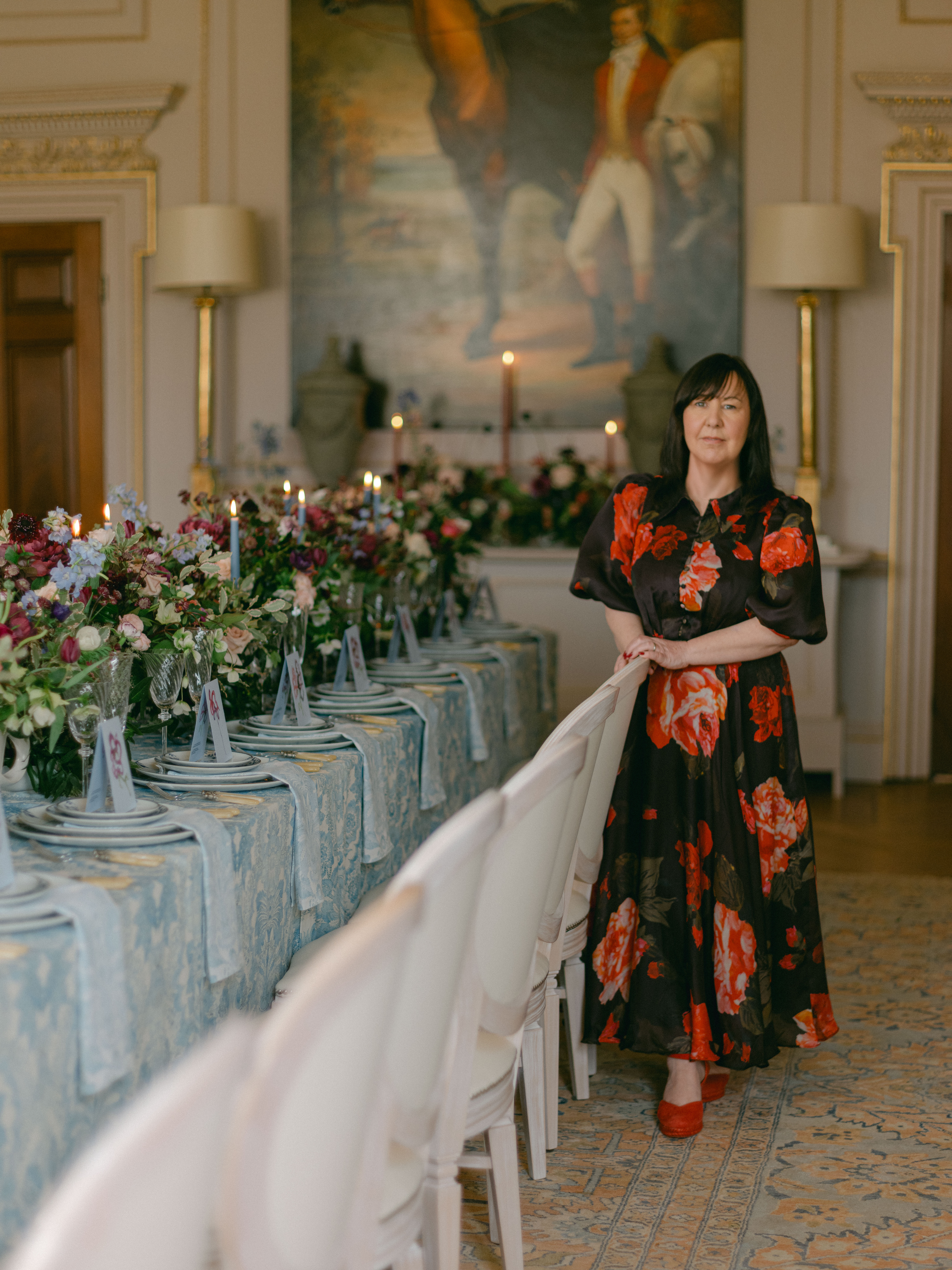
When I first started exploring sustainable floristry, I’ll be honest – I thought it would simply mean making the decision not to use floral foam and favour eco-friendly alternatives. Little did I know that choosing the sustainable path would completely transform how I create and appreciate floral arrangements.
Working with locally grown, seasonal flowers has taught me to see beauty in imperfection. There’s something magical about embracing the natural curves of garden roses or the unexpected twist of a locally grown delphinium that you just don’t get with uniform, imported blooms. These “imperfections” bring character and life to arrangements in ways that mass-produced flowers can’t.
In my practice, I’m deeply committed to sourcing British-grown flowers whenever possible, and I make every effort to work with local growers first. However, my approach to being sustainable doesn’t mean being inflexible, sometimes small compromises are necessary to fulfil a client’s vision, or meet specific event requirements.
What I never compromise on, though, is my commitment to sustainable mechanics. You won’t find floral foam in my studio; I rely on traditional techniques like chicken wire, pin holders, and other eco-friendly methods that allow me to create beautiful designs while staying true to my environmental values.
Is floral foam bad?
Many florists are moving away from floral foam - once a crutch almost all relied upon. I am most definitely one of them, and never use it in my floristry.
These dark green blocks become squidgy when soaked in water, acting like a sponge to both hydrate and hold stems in countless arrangements. They’ve been a go-to for professional and amateur florists alike since they were invented in the 1940s. Sounds the perfect option, doesn’t it? Unfortunately, it certainly isn’t.
The problems with floral foam are manifold. Firstly, it’s made up of microplastic. When we pour away the water the blocks have soaked in, they are completely polluted with minute particles of plastic, which have invaded and polluted our waterways and seas. Similarly, when we throw away a used block, it immediately degrades into microplastics, further contaminating landfill sites.
Another giant issue is that each block is single-use. Each block contains as much plastic as 10 plastic carrier bags, too. Bear in mind that a wedding will likely be creating many installations, using many blocks, and you can imagine just how much single-use plastic would be thrown away.
Similar to insulation foam, these blocks also contain toxic components, such as formaldehyde, carbon black, barium sulfates, and phenolic foam.
Florists often cut this foam with a saw to customise its size, releasing microparticles into the air. These can irritate your respiratory tract, and your eyes and skin can suffer just from touching it. But blisters and contact dermatitis aren’t the worst of it - formaldehyde is classified as a probable human carcinogen by the USA’s Environmental Protection Agency (EPA).
It’s easy to assume that floral foam is biodegradable, because it crumbles apart so easily. But nothing could be further from the truth. It does not decompose naturally, instead leaving microparticles of plastic in our water.
So - that’s why floral foam is a hard no for me!
Sustainability isn’t black and white
But let me be honest – this path isn’t always strewn with rose petals. Sustainable floristry often means telling clients that their dream peonies aren’t available in December, or that the perfect shade of pure white roses they saw on Pinterest might not be possible without chemical bleaching.
The rewards, though, are worth every challenge. When you create an arrangement using flowers grown just miles from your studio, and techniques that honour both the environment and the natural beauty of each stem, you’re not just making a pretty centrepiece – you’re telling a story about our connection to the seasons and the land.
Sustainable floristry isn’t the easy route, but it’s made me a better artist and a more mindful creator. In trying to work with nature rather than against it, I’ve found a deeper appreciation for the fleeting beauty of flowers and the true meaning of luxury – something that is real, meaningful, and connected to the world around us.
A Personal Note on Choice
I want to be clear – these are simply my thoughts and experiences as one floral designer, trying to navigate the complex world of sustainable floristry. While I’ve chosen this path and believe strongly in it, I recognise that every florist’s journey is different. Some may have access to amazing local flower farms, while others might be working in areas where such resources are limited. Some might be able to go
100% local, while others need to find their own balance. Equally, I’m not professing perfection. An event’s environmental footprint does become so much lighter by consciously minimising the use of single-use plastics and prioritising local growers, but these are still celebrations which require transportation, products, and ultimately, the growing and cutting of flowers!
What I’ve shared here comes from my personal experience and reflects the choices I’ve made it for my business. These aren’t universal rules or judgments on others’ practices – they’re simply the guidelines that help me sleep better at night, knowing I’m doing what I believe is right for my business. I respect that other florists might make different choices based on their circumstances, clients, and beliefs. That said, I’ve seen firsthand how even small steps toward sustainability can make a difference. Whether it’s choosing local flowers when they’re available, eliminating floral foam, or simply being more mindful about waste, every effort counts. I share my perspective not to preach, but to show one possible path forward in an industry that’s gradually awakening to environmental concerns.
For me, sustainable floristry isn’t just a trend or a marketing angle – it’s a commitment I’ve made, based on my values and vision, for the future of floral design.
While it might not be the right path for everyone, it’s the one that feels authentic to me and my creative journey.
Does your vision for your celebrations include sustainability considerations? Get in touch today to discuss the specific sustainable factors of our praxis.


Comments